
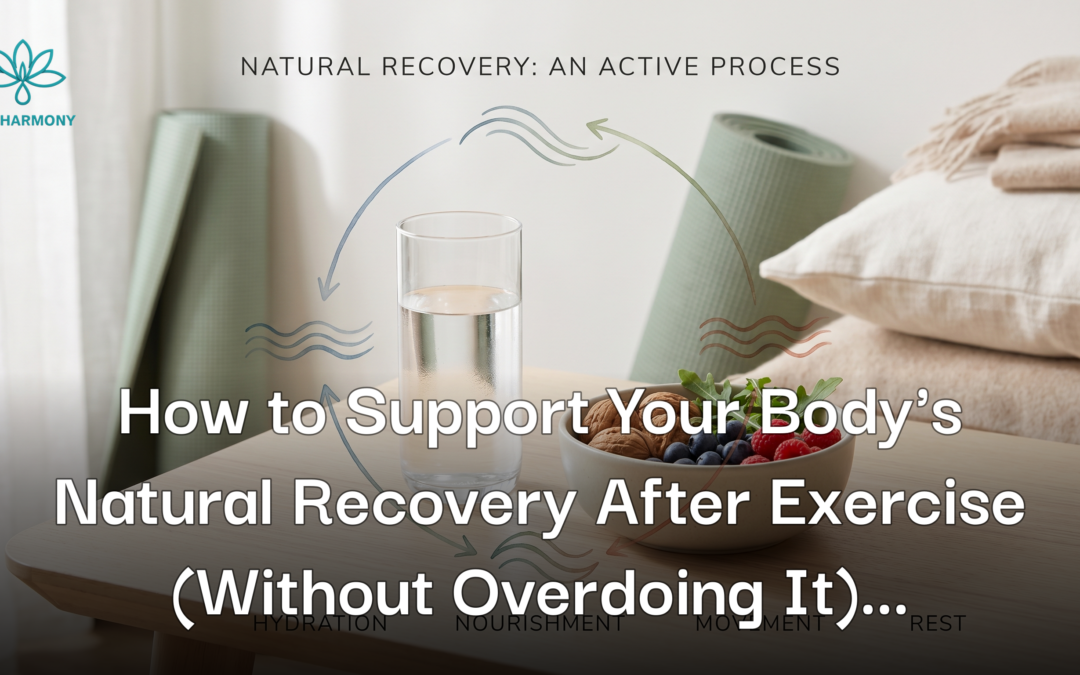
Most people who train consistently have made the same mistake at some point: they obsess over the workout itself and treat everything that follows as an afterthought. Or they swing the other way, stacking ice baths, BCAAs, compression gear, and a six-supplement stack onto a foundation of five hours of sleep and a skipped lunch. Neither approach works. What the research actually shows is that recovering well after training is less about finding the perfect intervention and more about getting a handful of fundamentals consistently right.
Why Recovery Is Where the Adaptation Actually Happens
Here is the part that gets lost in the conversation about training hard. The workout is the stimulus. The adaptation – getting stronger, more resilient, better conditioned – happens during the recovery window, not during the session itself. Disrupt that window too often and you are not just slowing progress. You are actively working against it.
A 2014 study found that chronic stress slows muscle repair after exercise because the body deprioritises tissue recovery when it is locked in a stress response (Polar, 2024).
That is not just a mental health issue with physical side effects. It means that two people doing identical training programmes can have meaningfully different outcomes based purely on what is happening in their lives off the gym floor. Sleep quality, psychological load, and even how rushed your mornings feel all feed into the same system.
The implication is straightforward: post-workout recovery support means treating the recovery side of the equation with the same seriousness as the training side. This is what holistic performance actually looks like.
Nutrition: What to Eat, When to Eat It, and Why the Timing Debate Is Overblown
Post-workout nutrition gets treated like a narrow window that slams shut 30 minutes after your last rep. The reality is more forgiving. Research from Healthline confirms that overall daily protein intake is a stronger predictor of muscle recovery than the precise timing of consumption around a workout. That said, there is still a reasonable target to aim for: 20 to 40 grams of protein consumed multiple times across the day, roughly 3 to 5 times depending on training intensity and sport type (Danone Research).
Carbohydrates matter too, and this is where a lot of fitness-focused eaters undercut themselves by going too low. Within the four hours following exercise, consuming 1.0 to 1.2 grams of carbohydrate per kilogram of body weight supports glycogen replenishment (Danone Research). For a 75kg person, that is 75 to 90 grams of carbohydrate – not a small amount, and not something a low-carb approach makes easy.
The practical takeaway: build your daily eating around adequate total protein and carbohydrates, time them sensibly around training where you can, and stop stressing over the exact post-workout window if your broader diet is already dialled in.
Hydration: More Specific Than Most People Realise
Drinking enough water is the most unsexy piece of recovery advice and also one of the most consistently supported. General guidelines suggest between half an ounce and one ounce of water per pound of body weight daily – for a 150-pound person, that is 75 to 150 ounces depending on activity level and climate (Pliability). After a session where you have actually sweated, the target becomes more specific: 1.5 litres of water for every kilogram of body weight lost during activity (Danone Research).
Sports drinks come up a lot in this conversation and deserve a clear-eyed look. Electrolyte replacement is genuinely warranted for high-intensity sessions lasting over an hour, particularly in hot or humid conditions. For a 40-minute gym session in a temperature-controlled room, water alone is almost certainly sufficient. Many commercial sports drinks carry significant sugar loads that are simply unnecessary for moderate training, so if you do reach for one, it is worth checking the label.
Active Recovery vs. Complete Rest: Getting the Balance Right
Complete rest has its place. After genuinely hard training blocks, after illness, or when the body is signalling something beyond ordinary fatigue, doing nothing is the right call. But for most regular training days, low-intensity movement between sessions outperforms the couch.
Active recovery keeps the heart rate in the 30 to 60 percent of maximum range – a practical way to gauge this is the talk test: if you can hold a steady conversation without gasping, you are probably in the right zone (NASM). Research from Ortiz et al. (2018) suggests that 6 to 10 minutes of light cardio immediately after a workout session supports recovery better than stopping abruptly. Foam rolling post-workout has also been shown to reduce the onset of delayed onset muscle soreness, or DOMS (Ozsu et al., 2018, via NASM).
What does this look like in practice?
- A 10-minute walk after your session.
- An easy cycling day between heavy lifts.
- A yoga class on what would otherwise be a rest day.
Nothing dramatic. The point is to keep circulation moving and avoid the stiffness that comes from going from intense effort to complete stillness.
The Icing Question
Applying ice to a sore muscle is one of those practices that has moved from universal recommendation to something more nuanced. The commonly cited protocol – around 20 minutes of icing, allowing the area to return to normal temperature before repeating – is still widely used for managing acute swelling (Pliability). But the evidence is more complicated than popular practice suggests. The inflammatory response that follows exercise is part of the repair process, and there is a real question about whether aggressive or poorly timed icing interferes with that process rather than supporting it. Use it selectively, not as a default response to every sore muscle.
Sleep: The One Thing You Cannot Supplement Your Way Around
No single supplement, protocol, or biohack compensates for consistently poor sleep. Sleep is where the most significant tissue repair and hormonal regulation occurs, and it is the recovery tool with the strongest and most consistent evidence base across all the sources cited here.
Building a recovery and sleep routine that actually works does not require anything elaborate. The essentials are:
- A consistent sleep and wake time.
- A cool and dark room.
- Limiting screens and stimulants in the hour before bed.
- Protecting the full seven to nine hours where possible.
These are not suggestions to consider alongside a supplement stack. They are the foundation the stack sits on.
The Supplement Conversation: Useful in Context, Oversold in General
Some natural recovery supplements have genuine support behind them. In a double-blind trial of 151 athletes, 5 grams of glutamine taken immediately after heavy exercise and again two hours later reduced infection incidence to 19%, compared with 51% in the placebo group (EBSCO Research Starters). That is a meaningful result for athletes in heavy training blocks who are managing immune load.
Other commonly marketed options have more mixed or limited evidence:
- BCAAs: modest effects in specific contexts.
- Bromelain: limited evidence outside targeted use cases.
- Glucosamine: mixed results across studies.
- Cherry juice concentrate: some support, not conclusive.
- High-dose antioxidants: inconsistent findings.
None of them reliably compensate for a poor diet or inadequate sleep. The honest framing for supplements for active lifestyle use is exactly that: supplementary. They sit on top of the fundamentals, not in place of them.
Stress, Load Management, and Knowing When to Pull Back
One angle that does not get enough attention in how to improve recovery after exercise is the cumulative load question. Training load should increase gradually over time. Jumping volume or intensity too quickly is a reliable path toward injury, illness, and burnout. Coaches often use gradual weekly load increases as a guardrail – the specific numbers vary by individual, but the principle of incremental progression rather than sudden spikes is broadly supported. The American Academy of Pediatrics goes further for young athletes, recommending at least two to three months away from any single sport each year to support long-term recovery and prevent burnout (Hoag Orthopedic Institute).
For adults, the equivalent is paying attention to the signals. The following are all signs that the recovery side of the equation needs more attention than the training side right now:
- Persistent fatigue that does not resolve with a rest day.
- Declining performance over multiple sessions.
- Disrupted sleep.
- Elevated resting heart rate.
Putting It Together
The most effective gym recovery routine is not the most complicated one. It looks like this:
- Eat enough protein and carbohydrates across the day.
- Hydrate to your body weight and activity level.
- Move lightly between hard sessions.
- Sleep seven to nine hours consistently.
- Manage the stress load in your life as seriously as you manage your training load.
Get those right, and you have done the majority of the work. For those who want to go further, there are science-backed options worth exploring – but the place to start is always the basics. Once those are genuinely in place, targeted support can complement what you are already doing well. That is what active lifestyle wellness actually means.