
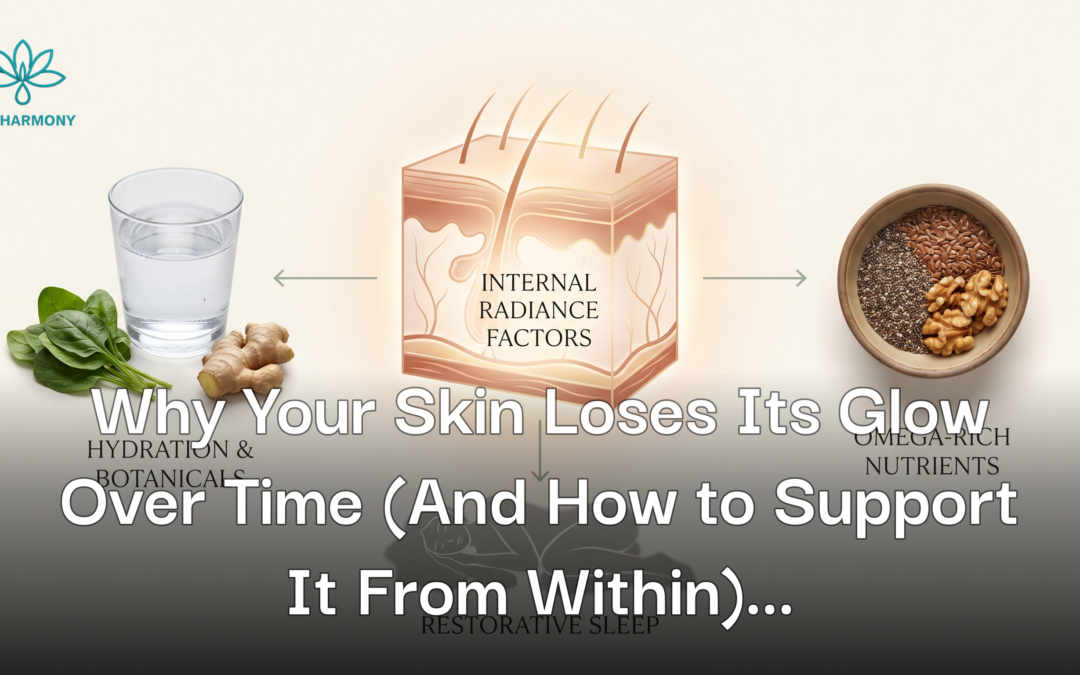
Most people notice it gradually. The skin that used to look fresh after a good night's sleep starts needing more coaxing. Foundation sits differently. The mirror in natural light feels less forgiving. And the instinct is usually to reach for a new product.
Sometimes that helps. But when the root causes are internal, layering more topicals rarely restores radiance on its own. The biology of skin glow is more upstream than most skincare marketing suggests.
What Actually Happens to Skin Over Time
Young skin turns over dead surface cells roughly every 28 days. That cycle slows considerably with age, and when it does, dead cells accumulate on the surface rather than shedding cleanly. The result is uneven texture, a flat tone, and the kind of dullness that no highlighter fully fixes.
Underneath that surface slowdown, collagen and elastin are also degrading. These structural proteins give skin its bounce and the ability to reflect light evenly. Free radical damage, driven by UV exposure and environmental pollution, accelerates that breakdown. Air pollutants accumulate on the skin's surface, rob cells of oxygen, and over time degrade collagen for skin health, leaving a dull, crepey complexion (Sarah Chapman). UV-induced photoaging compounds this, causing uneven pigmentation, rough texture, and brown spots even on overcast days. An SPF 15 or above worn consistently is one of the clearest ways to slow that process (Healthline).
Stress adds another layer. Chronically elevated cortisol has measurable negative effects on skin health and appearance (Lompoc Valley Medical Center). It's not a vague connection. Long-term stress disrupts sleep, affects nutrient absorption, and can worsen inflammatory skin conditions.
The Internal Factors Most People Underestimate
Dull skin is widely treated as a topical or cosmetic problem. It isn't, or at least not only. Diet, sleep, hydration, and stress all shape what skin looks like from the inside.
Sleep is when a lot of the important work happens. During rest, skin turns over dead cells, generates new healthy cells, and produces new collagen, which helps support skin plumpness and a rested appearance (Lompoc Valley Medical Center). Consistently poor sleep cuts into that process in ways no morning serum fully compensates for.
Diet shapes the raw materials your skin has to work with. A diet high in refined carbohydrates may speed up skin aging, while antioxidant-rich foods help neutralise the free radicals that accelerate collagen degradation (Mayo Clinic). Lean proteins, vegetables, whole grains, and fruit provide the building blocks that support healthy skin structure. This is the beauty from within principle, and it's less of a marketing phrase than an accurate description of how skin and nutrition actually work.
Alcohol is worth looking at honestly. It depletes several B vitamins, including folic acid, which helps skin retain moisture, and is associated with higher levels of inflammation linked to skin conditions such as psoriasis and eczema (Lompoc Valley Medical Center). That depletion shows up on the skin.
Smoking narrows the tiny blood vessels in the outermost skin layers, reduces blood flow, and depletes skin of oxygen and nutrients while damaging collagen and elastin fibers (Mayo Clinic). The visible result is skin that looks older and duller than it otherwise would.
Exercise does something no serum replicates: it increases healthy oxygen flow to skin cells and helps neutralise free radicals and oxidative stress, carrying waste products away from cells (Rao Dermatology).
Even moderate, consistent movement makes a difference over time.
Hydration: Internal and External
Drinking enough water matters for skin wellness, but it's not a standalone fix. Hydration works alongside sleep, diet, exfoliation, and other lifestyle factors rather than substituting for them. Think of it as a necessary condition, not a sufficient one.
Externally, moisturising twice daily helps maintain skin health and supports the barrier function that keeps water in and irritants out (Healthline, 2017 review). The twice-daily habit is straightforward and the evidence behind it is solid.
One thing worth flagging: hot showers feel good but strip natural oils from the skin barrier, leaving it looking tired and dull. Cooler water, or at least finishing with it, is a small habit with a real effect.
What You Can Do Starting This Week
A few practical changes that are grounded in the research:
- Exfoliate 2 to 3 times per week: This removes dead cell buildup that causes uneven tone and rough texture (GM Collin). Individual skin tolerance varies, so start at twice a week and adjust from there.
- Wear SPF daily, not just in summer: UV damage accumulates on cloudy days too, and SPF 15 or above consistently applied is one of the most evidence-backed habits for maintaining skin clarity over time.
- Prioritise sleep quality: The collagen production and cell renewal that happen during rest are not replicable during waking hours. This one is non-negotiable for a healthy skin lifestyle.
- Reduce refined carbohydrates where you can: Not a dramatic overhaul. Just a gradual shift toward whole foods that give your skin better inputs.
- Manage stress with something that actually works for you: Walking, breathwork, time away from screens. Cortisol's effect on skin appearance is real, and stress reduction is a legitimate part of a skin wellness routine.
Topical Ingredients With Evidence Behind Them
Internal support and topical care work best together. A few ingredients are worth knowing about.
- Retinoids (vitamin A derivatives) have been shown to stimulate collagen growth and normalise skin cell turnover, smoothing the surface so light reflects more evenly (Healthline). They're among the most studied topical ingredients for natural skin rejuvenation.
- Niacinamide reduces the transfer of melanin to the upper skin layers and works alongside vitamin C to address uneven pigmentation (Sarah Chapman). The combination is more effective than either alone.
- Vitamin C is a well-established antioxidant in topical form, supporting skin brightness and helping to neutralise free radical damage at the surface level.
- Hyaluronic acid and AHAs (like lactic acid) address hydration and gentle surface exfoliation respectively, supporting skin elasticity support and a more even tone over time.
None of these replace the internal work. They complement it.
The Bigger Picture
Dull skin is not an inevitable consequence of getting older that you simply accept or mask. Many of the causes are addressable. Cell turnover can be supported. Free radical damage can be slowed. Sleep, diet, stress, and hydration are all levers you actually control.
The conditions for healthier-looking skin are largely within reach. They just start further upstream than most skincare marketing suggests.
If you're looking at where to begin alongside lifestyle changes, science-backed wellness solutions exist that are designed to support skin health from within. Explore what's available and see how an inside-out approach fits your routine.